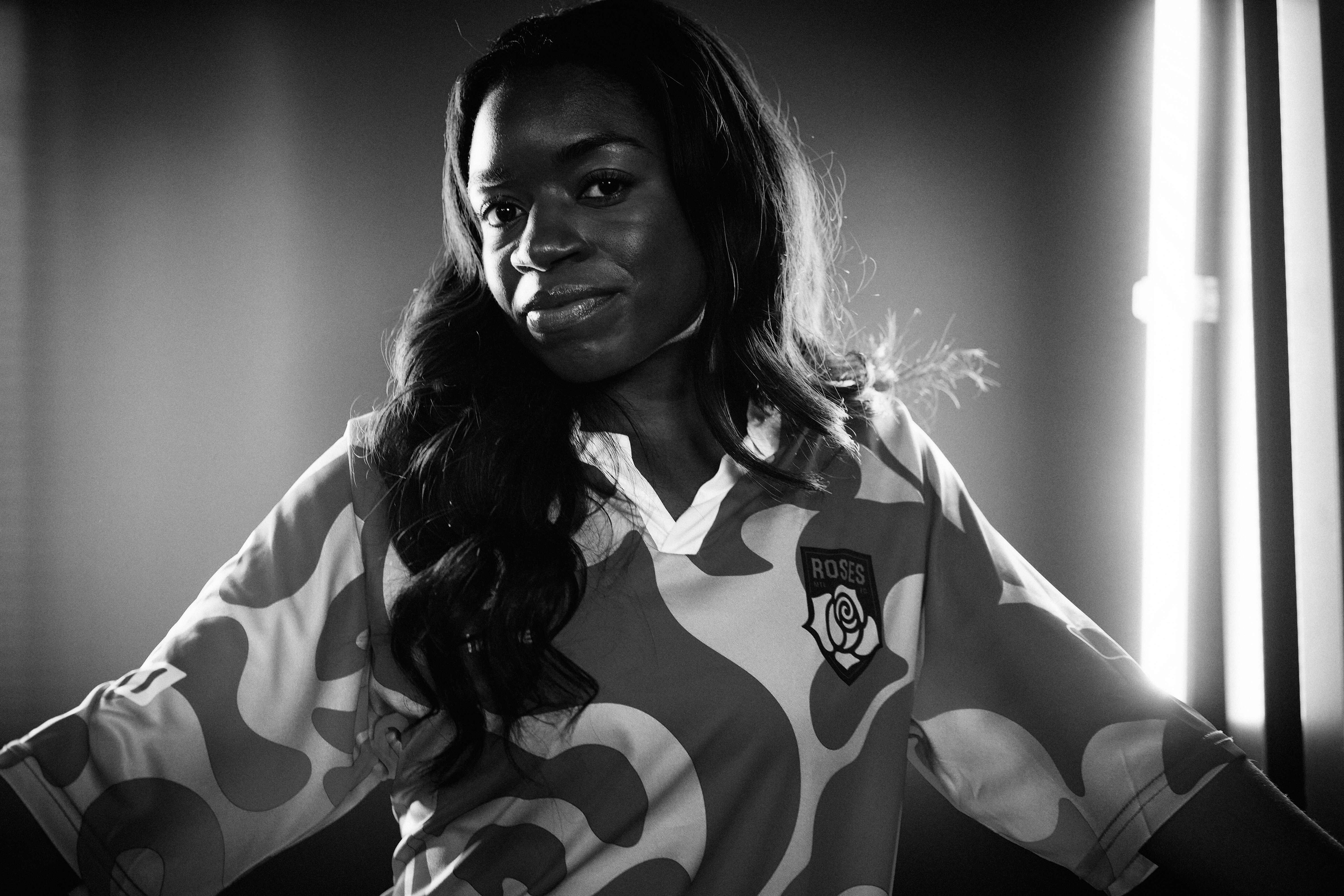
HAILEY | A BLACK HISTORY MONTH FEATURE
Published on
February 04, 2026
Share this Post
“Get your passport and put your seatbelt on. It’s about to be a crazy ride.”
That’s what Hailey Whitaker would tell her five-year-old self if she could go back. The girl in Birmingham, Alabama, who fell in love with soccer because she liked outrunning defenders and scoring goals. The girl who would score 107 times in high school, then remake herself into a defender. The girl who would leave the only country she had ever known and build a life in Finland, then Iceland, then Canada.
Whitaker is 25 now. She has won an Icelandic Cup, played in the UEFA Champions League, and become a starter for the Montréal Roses in the Northern Super League’s inaugural season. She has lived in four countries across two continents. And everywhere she goes, young Black girls follow her. They show up at games. They send messages. They tell her she’s an inspiration.
She’s building the path she never had.
“Growing up I had very few people to look up to that looked like me,”she says. “I try to be the person my younger self needed and hope this resonates with other young Black girls.”
This is her story.
Birmingham
Hailey Whitaker grew up in the Oak Mountain area, a suburb in Shelby County, about 20 miles south of Birmingham, Alabama. It was a place where soccer was taken seriously. It was also, as Whitaker herself has said, a place without much diversity. When she looked around for role models who looked like her, there weren’t many to find.
But she had soccer. And she had a talent that was hard to ignore.
At Oak Mountain High School, she was prolific. Over 103 games, she scored 107 goals and added 58 assists. She won a state championship in 2015, made the All-Metro team three times, and became one of the most dangerous attackers in Alabama high school soccer history.
But when Whitaker talks about those years, she doesn’t dwell on the numbers. She talks about the people who showed up for her.
“My community is what makes Alabama so special,” she told Beautiful Game Network during her college years. “I get support from old teachers, old coaches, parents and little kids that I don’t know personally, but they support me because I am from our small community. It makes me feel special, and it gives me even more motivation to play hard.”
She is the daughter of Marci and Reggie Whitaker, sister to Brandon, Cameron, and Raegan. That foundation has never left her. No matter how far she has traveled, she has carried Birmingham with her.
But to become who she needed to become, she would have to go further than anyone around her had gone before.
Auburn
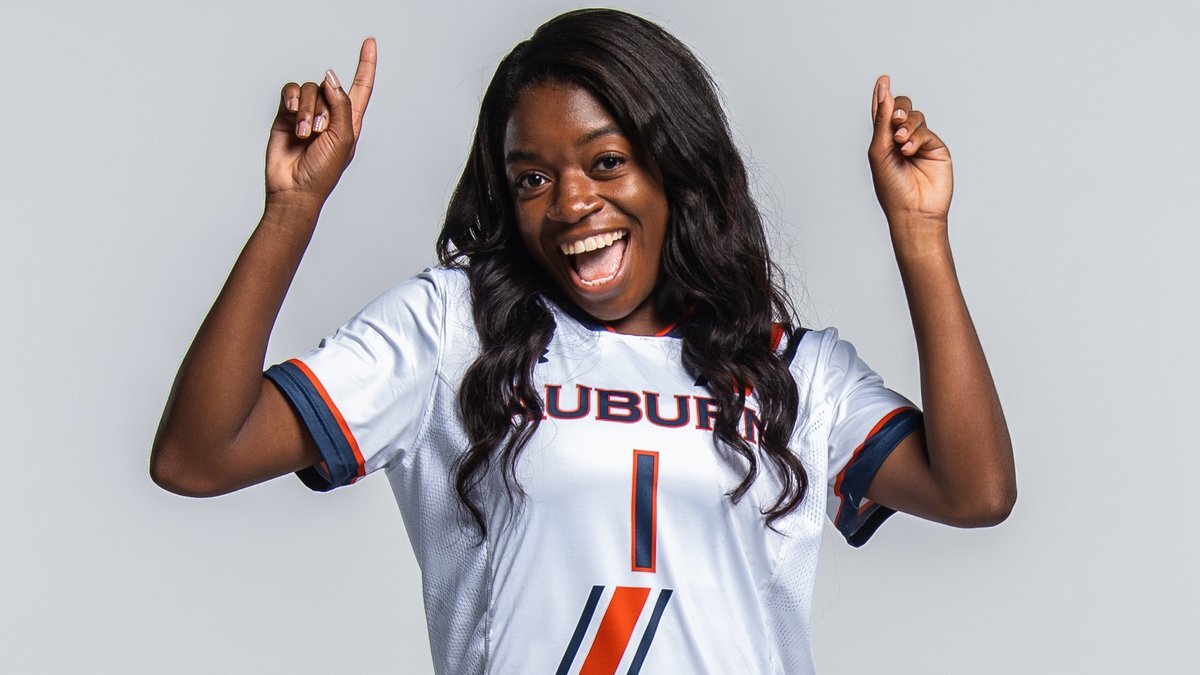
She chose Auburn University because it was close to home. A couple hours down the road. Near enough to visit, far enough to grow.
What she didn’t know was that Auburn would ask her to become a completely different player.
The coaches saw something in her beyond the goals. Her speed. Her intelligence. Her ability to read the game. They wondered if those gifts might serve the team differently. Gradually, she moved. Forward to midfielder. Midfielder to outside back. The girl who had built her identity on scoring learned to find meaning in defending.
It required her to rewire her instincts. There is glory in putting the ball in the net. There is less glory in tracking a runner, closing down an angle, making the tackle that stops an attack before it starts. She had to learn to measure success differently.
By the time she finished her five-year Auburn career, she had appeared in 94 matches, the second-highest total in program history. She had earned academic honours every year. And she had become a defender.
Auburn was also where she began to think differently about visibility.
She arrived on campus in 2018, a Black woman at a university where Black students made up about five percent of the population. Then came the summer of 2020. George Floyd was murdered in Minneapolis. Athletes across the country raised their voices, joined marches, demanded accountability. At Auburn, Whitaker was among them.
Around the same time, she started noticing something. Young Black girls showing up at games. Approaching her afterward. Telling her she was an inspiration.
“At Auburn, already, little girls came to see me to tell me how much I was an inspiration because I’m a Black athlete,” she told La Presse last year.
She began to understand that being seen was part of the work. The path she was creating wasn’t just for herself anymore.
The World
After graduation, Whitaker could have stayed close to home. Instead, she got on a plane.
First to Finland, where she played for Åland United in 2023. It was her first time living somewhere where English wasn’t the primary language. Then to Iceland, where she joined Valur Reykjavík and played every minute of every league match. She won the Icelandic Cup. She competed in the UEFA Champions League.
Each step took her further from home. Each step proved something was possible.
“There isn’t much diversity where I am from,” she says, “so leaving home changed my entire perspective on many things and what kind of person I want to be. I love learning and immersing myself in different cultures, because there is something so beautiful about each one.”
The Icelandic league is physical and demanding. At 5’1”, Whitaker is not an imposing presence. But she learned to use her size as an advantage. Low center of gravity. Quick feet. The ability to change direction in ways bigger players couldn’t match.
“I feel like I carry a piece of each country I’ve lived in with me,” she says. “I have friends from all over that remind me of where I have been and who I continue to become.”
Montreal
Whitaker signed with the Montréal Roses on February 6, 2025. By season’s end, she had logged 2,019 minutes and helped the team reach the playoffs in their inaugural year. In November, she signed a contract extension through 2026.
She has found home again.
“Montreal is incredible,” she says. “The people, the food, the city, the language… you can’t beat it. The community here has warmly embraced me like one of their own, and that means the world to me.”
She rides the metro to explore the city. She is learning French from her teammates. Another language. Another culture to immerse herself in. Another place to belong.
“It shows in the way you play when you feel good mentally and have a good sense of pride for your club, city, and fans.”
And still, the young Black girls find her. The messages keep coming. The responsibility she first felt at Auburn has followed her across the Atlantic, through Finland and Iceland, all the way to Quebec. It has only grown.
“This is a massive responsibility to me,” she says. “I stay true to myself at all times and work hard to lead by example, while having fun doing it. I hope young Black girls can take that away from watching me play, too. It’s possible to do all the things you want and more.”
She has already been so many things. A scorer. A defender. An American abroad. A stranger who learned to find home, again and again. She knows that who she is today is not who she will be tomorrow.
And somewhere, a young girl is watching. Seeing someone who looks like her. Starting to believe.
It’s possible.
—
About This Series
This feature is part of the Montréal Roses’ Black History Month series, celebrating the Black players who make our club what it is. Throughout February, we will publish in-depth profiles of our athletes to honour the full breadth of who they are : their journeys, their values, their personalities, and their perspectives. These are stories of excellence, resilience, and community. We are proud to share them.