A Black History Month Feature | Montréal Roses
ELYSE | A BLACK HISTORY MONTH FEATURE

Published on
February 11, 2026
Share this Post
There’s a question Elyse Bennett asks herself often.
You could lose it all tomorrow, so who are you today?
It’s not hypothetical for her. She has watched careers end in an instant. She has felt her own knee give out, twice, before she turned twenty-one. She has packed her life into suitcases and moved to cities where she knew no one, six times in four years.
“I hope for me they can say she was a light,” she says, when asked how she wants to be remembered. “A positive, charismatic individual who led with grace, kindness and humility.”
Elyse Bennett is not loud about her faith. She doesn’t preach. But it runs through everything. Every answer, every decision, every setback she has turned into a step forward. It’s the reason she’s still playing. The reason she didn’t quit after the second surgery. The reason she turned down physician assistant school to chase something she couldn’t quite name.
The reason she’s here, in Montreal, ready to build something new.
“Nothing is impossible with God,” she says. “No dream is too big.”
De Pere
The drive was two hours each way.
Every week, Elyse’s mother would load her into the car and make the trip from De Pere, Wisconsin to Milwaukee. FC Wisconsin Eclipse. The only training environment nearby that could prepare her for what she wanted to become. Four hours round-trip. Homework in the backseats. School the next morning.
Most professional soccer players start at five. Elyse started seriously in high school. By any conventional measure, she was seven or eight years behind the players she would eventually have to beat.
She didn’t see it that way.
“I honestly didn’t think much of it,” she says. “I’m someone who never turns away a challenge. I just put my head down, put in the time, and let God guide me in the direction He saw fit for my life.”
But she is careful to say the sacrifice was not hers alone.
“My family honestly kept me going. The time and commitment my mom was also making to get me to and from training, so that I could get my homework done and stay academically sound, was something I never took for granted. It wasn’t just me sacrificing daily. Without my family’s support in all areas of my life, I wouldn’t be the woman I am or where I am today.”
De Pere is a small city outside Green Bay. Packers country. Elyse’s father, Edgar Bennett III, played running back for the Packers and won Super Bowl XXXI. But his daughter was chasing a different game, one with less infrastructure, less visibility, and far fewer people who looked like her.
“Growing up in a small town in Wisconsin was honestly really challenging for me when it came to race,” she recalls. “I had maybe ten other Black individuals in my class size and we looked different from the majority of our classmates. I felt like I needed to conform or mold myself to not ‘stand out’ and I didn’t really grasp the gravity of that until I left for college.”
She was making decisions she didn’t fully understand. Shrinking. Adjusting. Trying to disappear into rooms where she was always going to be visible.
“I knew at the time I was different, but I didn’t understand the nature of what I felt.”
It would take leaving home to understand what it had cost her.
The Recoveries
The first time her knee gave out, she was seventeen. The year before college. Washington State was waiting. Her future was mapped.
Then it wasn’t.
“Tearing my ACL the year before I was supposed to leave for college was extremely daunting for me. I had never had a major injury prior to this, so I was obviously extremely worried about who I’d be as a player returning from it. I didn’t know if I’d be the same or how I’d feel physically and mentally when I came back.”
Her father had walked this road. Multiple major injuries across an NFL career. He knew the darkness that followed the diagnosis. And he knew what his daughter needed.
“My dad had obviously experienced multiple major injuries in his NFL career and he just kept reminding me everything was going to be okay. During this time, he honestly instilled and strengthened my faith and always reminded me that I could do anything with and through God.”
Elyse attacked the rehab the same way she had attacked those four-hour training days. Drive, dedication, perseverance. She came back healthy, happy, and with a new found love and appreciation for the game.
Then, sophomore year, her other knee buckled.
“As soon as it happened, I just knew in my gut that it was the same injury.”
The physical process was easier the second time. She knew the exercises, the timeline, the milestones. But something else was harder.
“Mentally, it really took a toll on me. There were definitely times, initially, that I didn’t know if I wanted to continue playing as I was just in a state of shock and confusion.”
Two ACL tears before twenty-one. A 3.85 GPA in biology. A clear path to a career in medicine. She could have walked away, and no one would have blamed her.
“But once I wrapped my head around it and set my heart on moving forward, I carried on the same way I had in the past. I conquered my recovery for a second time and went on to have some of my greatest college seasons after that injury.”
The Belonging
Washington State gave Elyse something she hadn’t known she was missing.
“When I went to college and was surrounded by a large community of Black athletes, I finally felt ‘at home’ and like I fit in. I didn’t have to act like someone I wasn’t or fit a mold anymore.”
All those years in De Pere, the quiet calculations, the adjustments, the unspoken pressure to not stand out. Suddenly it all had a name. She could see what she had been doing to herself.
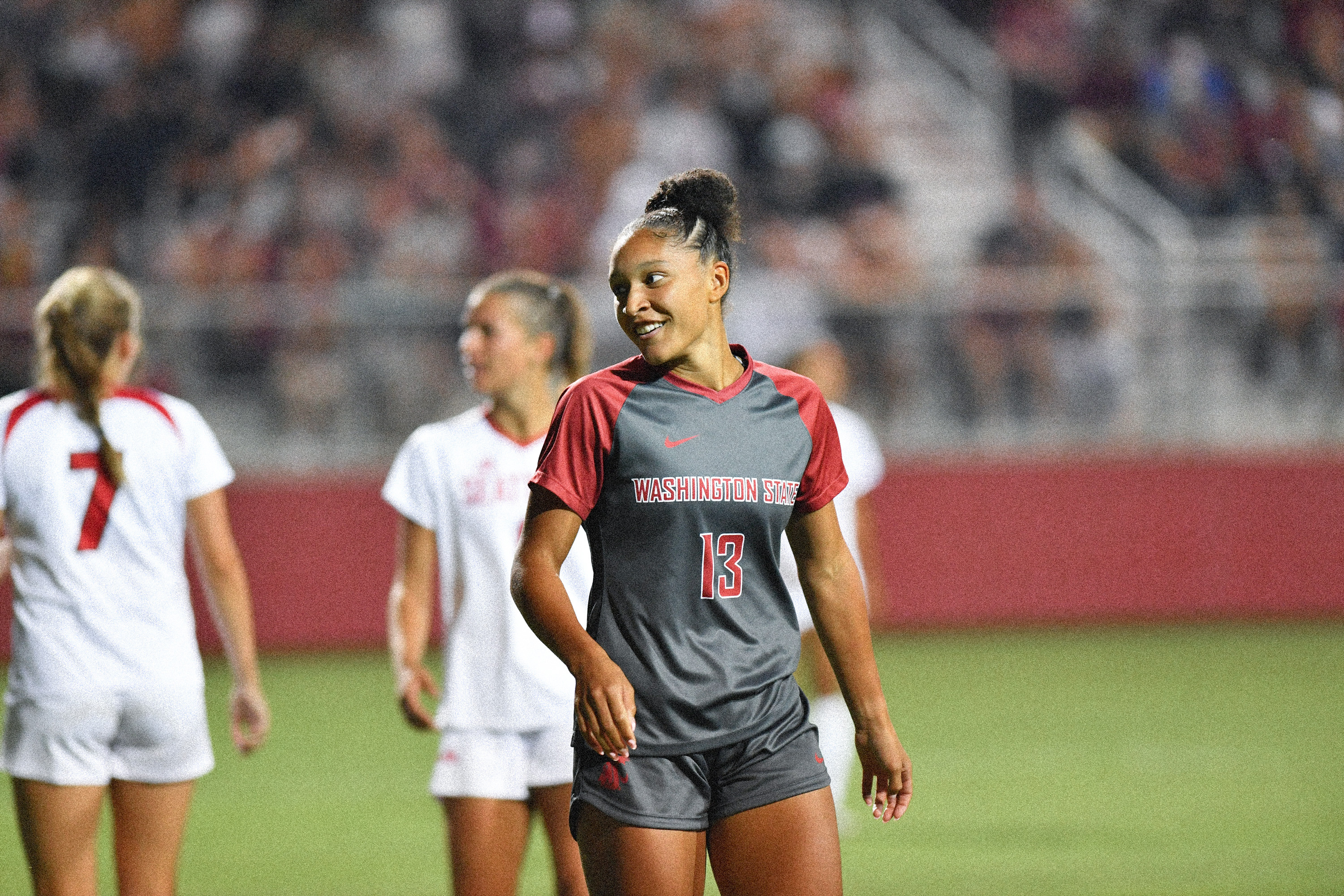
“I found a new community and that really helped me accept who I was. Moving forward I wasn’t going to waver on that to make anyone else more comfortable. I started to put me first and it felt freeing.”
She is careful to add context.
“That’s by no means a knock on where I grew up because these were personal decisions I was subconsciously making, but I truly believe community is everything.”
She finished her biology degree in three years. Earned Academic All-American honours. When COVID cancelled her senior season, she applied to physician assistant school. The interviews went well. The path was clear.
But something wasn’t right.
“For as long as I can remember, I knew I wanted to do something in the medical field and I worked diligently in college to maintain grades that would allow me to pursue that path. However, something in my gut was telling me during the interview process that I wasn’t 100% sure that was what I wanted at the time. And for me, I want to be 100% about something that I’m pursuing, as I give my all to everything I do.”
She had one year of eligibility left. She decided to use it.
“I thought why not come back and play with a lighter load academically and more time to enjoy the sport. Grad school would still be there a year later.”
That fifth year changed everything.
“I came back for my fifth year and had the most fun I had in all my years of soccer. The pure joy of the game came back to me. So I decided to enter the draft and that’s when my professional career began.”
The Road
Kansas City. Seattle. San Diego. Coruña. Orlando. Montreal.
Six clubs. Four years. Two continents. The math doesn’t make sense until you understand the economics of women’s professional soccer: the trades, the loans, the one-year contracts, the constant motion.
Elyse has learned to build a home anywhere.
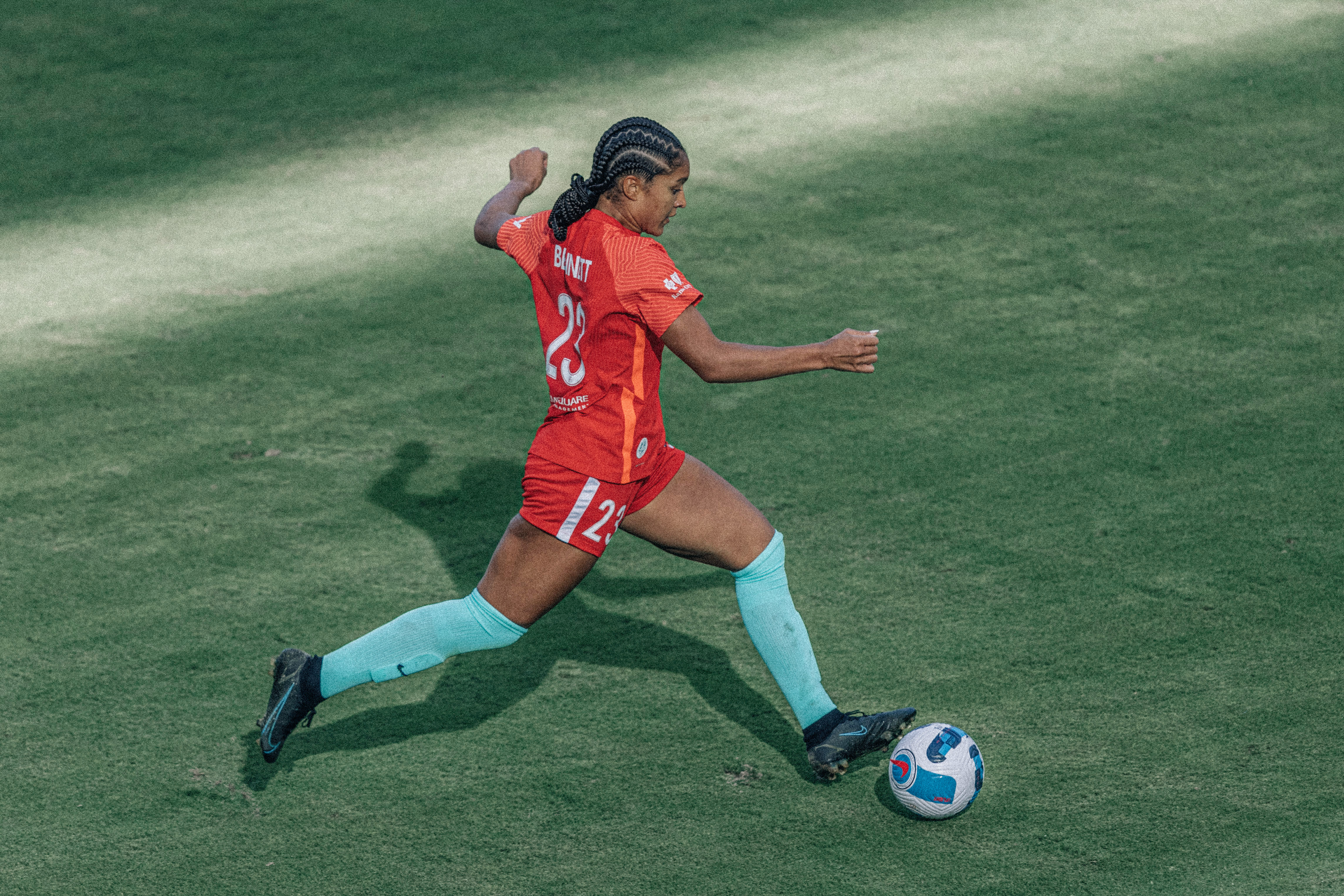
“I’ve always considered myself to be very adaptable. I like to say I’m a Type A person to my core, but my faith in God allows me to live life freely and according to His plan, not my own. So when life leads me down a path I didn’t expect or plan for myself, I know I’m being called there for whatever reason God sees fit.”
Not every chapter has been easy.
“While not every step of the journey has been enjoyable at times, I’ve always learned something along the way that has grown me as a woman. I take the lessons learned and apply it to whatever is next in my journey to hopefully impact the people and places I touch in the future as positively as I possibly can.”
Montreal
When Elyse spoke with the Roses leadership, she felt it immediately.
“I could feel the support and investment in the club through my calls with club leadership. The project they have in place and where they want to take this club is something I resonated with and wanted to be a part of.”
She is now twenty-six years old. She has rebuilt her body twice, found her identity once, and made a home in half a dozen cities. She knows how quickly things can change.
But she also knows what steadies her.
“My faith is my everything. It stabilizes me, guides me, and allows me to find the best parts and elements of each day. In the grand scheme of things, I have been so blessed in my lifetime, whether that’s my family, friends, finances, and life experiences. I have so much to be grateful for.”
She thinks about the girls who are out there now. The ones in small towns. The ones who might be the only Black girl on their team, in their class, in their world. The ones who feel like they have to shrink.
“That’s why I hope I can be a voice for Black girls in sport and in predominantly white communities where they may feel like an outsider. I would tell them to take up space, be exactly who you are and don’t conform to societal expectations. People will love you for exactly who you are or they won’t, but that’s not for you to fix.”
And to the girl she used to be, the one in the backseats doing homework on the way to Milwaukee, not knowing where any of this would lead?
“I would tell her everything you’re doing now is going to pay dividends. All the hours, blood, sweat and tears are going to culminate to something more special than you could ever imagine. God is going to take you places you never thought you’d go, introduce you to some of the best people, many of whom will become some of your best friends, and challenge you in ways that will enable you to continue growing every day.”
“Don’t stop now. The best is yet to come.”
—
About This Series
This feature is part of the Montréal Roses’ Black History Month series, celebrating the Black players who make our club what it is. Throughout February, we will publish in-depth profiles of our athletes to honour the full breadth of who they are : their journeys, their values, their personalities, and their perspectives. These are stories of excellence, resilience, and community. We are proud to share them.